

Michelin-starred restaurant interior design:
There's a moment I'll never forget. I'm standing in a restaurant we designed for Marco Pierre White. The man widely regarded as the godfather of modern cooking, the first British chef to earn three Michelin stars, and the mentor who once reduced a young Gordon Ramsay to tears in his kitchen.
Design Manifestation
But more importantly, the man Emma and I used to watch on MasterChef Australia, during our “lunch breaks” in our living room when we started building the company from our apartment, 15 years ago. Thinking, “Wouldn’t it be amazing to work with someone like him one day?”
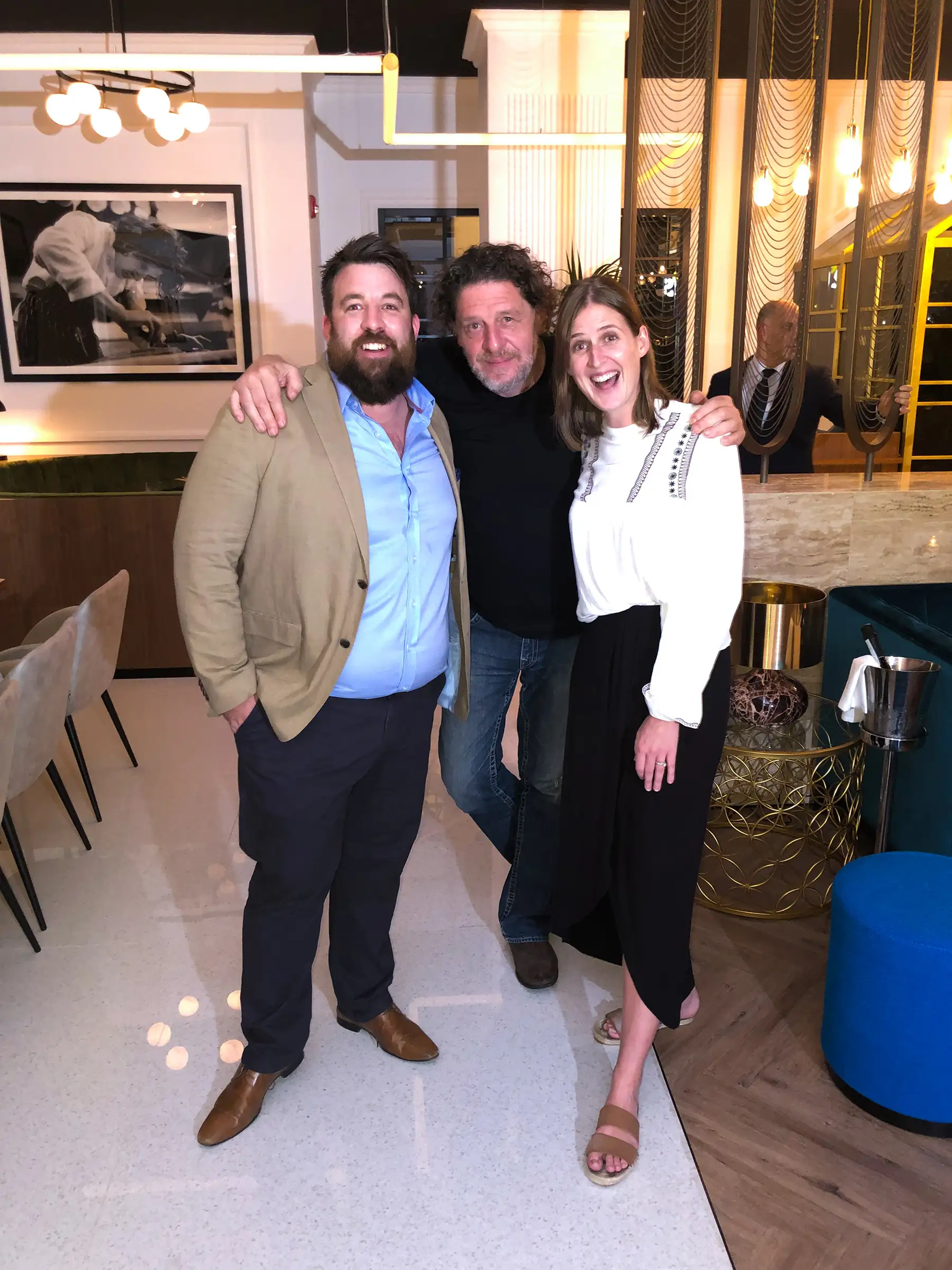
And then we stand in our restaurant no more than 10 years later. Marco is looking around the room. He’s taking in the details. The light. The materiality. The way the space feels before a single plate has been served.
He nods. That’s it. Just a nod. And from Marco Pierre White, I’ll take it. I was expecting a thorough grilling, or worse, looking like I’d just chopped a bunch of onions, a la Gordon Ramsay. So a nod, small but massive.
We’ve had the privilege of designing three restaurants for Marco so far, and FINCH is his appointed design studio for all international locations. What we’ve learned across those projects, and from working alongside Vineet Bhatia, the first Indian chef ever to receive a Michelin star, has really changed how we think about restaurant design.
In the early days, we were more focused on what was trendy, what looked good, what felt like a cool idea. The ingredient we were missing was the same obsessive philosophy that earns a kitchen a Michelin star: how does this work for the diner?
Restaurant Interior Design: Great Ingredients. Nothing More. Nothing Less
Marco Pierre White famously returned his three Michelin stars in 1999. His reason? He wanted his freedom back. He was tired of cooking for the guide. But the philosophy that earned those stars in the first place never left him, and it’s a philosophy built entirely on the idea that great cooking is about sourcing the finest ingredients and then getting out of the way.
From a design point of view, and a business point of view, I’ve taken a lot of this into FINCH. Where once I obsessed about awards, accolades, and pats on the back (of which there have been countless numbers), I now obsess on one question: what do we want people to feel about this space?
When you sit down with Marco to talk about a new restaurant, he doesn’t talk about trends. He doesn’t ask what’s fashionable in Milan this season or what materials are having a moment in New York. He talks about the feel of the room. He asks how a guest is going to feel the moment they walk through the door. Is the welcome warm? Is the lighting right? Does the space invite you to stay? What’s the music, how loud is it going to be, where are the speakers? Do we have somewhere for the customers’ bags? How far is the bar from the dining room? What artwork are we going with? That’s before we even get into the operational standards. It sounds simple. It isn’t.
Emma and I approach restaurant interior design the same way a Michelin-starred chef approaches a menu: with relentless focus on the quality of the components, and the discipline to resist adding anything that doesn’t serve the experience. Emma’s design philosophy has always been make it functional first, then get creative. In practice, that means every material we specify, every lighting decision we make, every piece of furniture we select has to earn its place. If it’s there for show, it goes. If it disrupts the flow of service, it goes. If it competes with the food for attention, it goes.
Decoration for decoration’s sake is the interior design equivalent of over-seasoning. Both ruin the dish. Designers, like chefs, need to back themselves and quite literally go with their gut.
The Art of Restraint: Designing Marco's Italian, Abu Dhabi
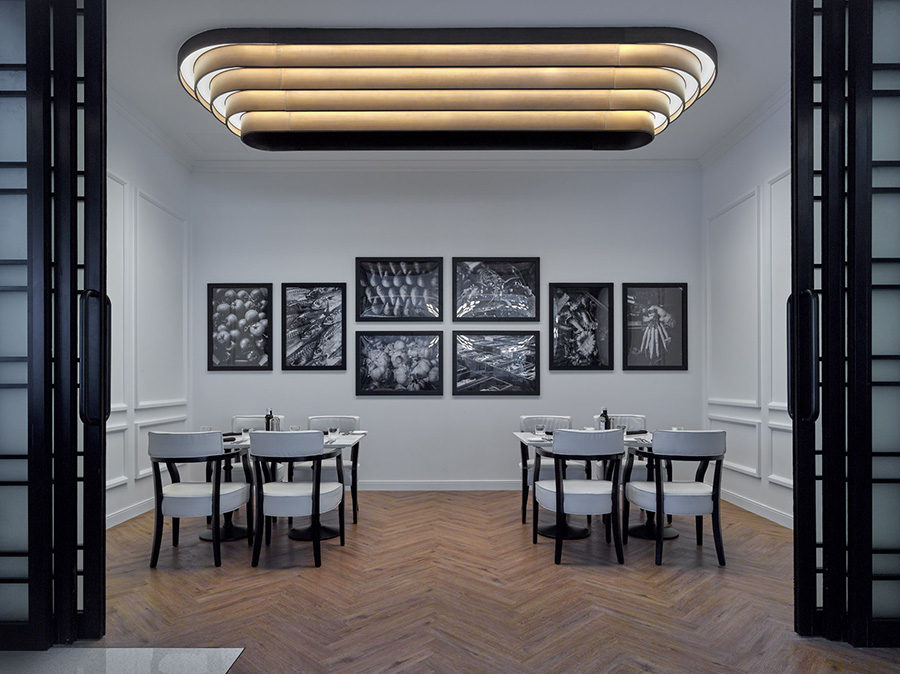
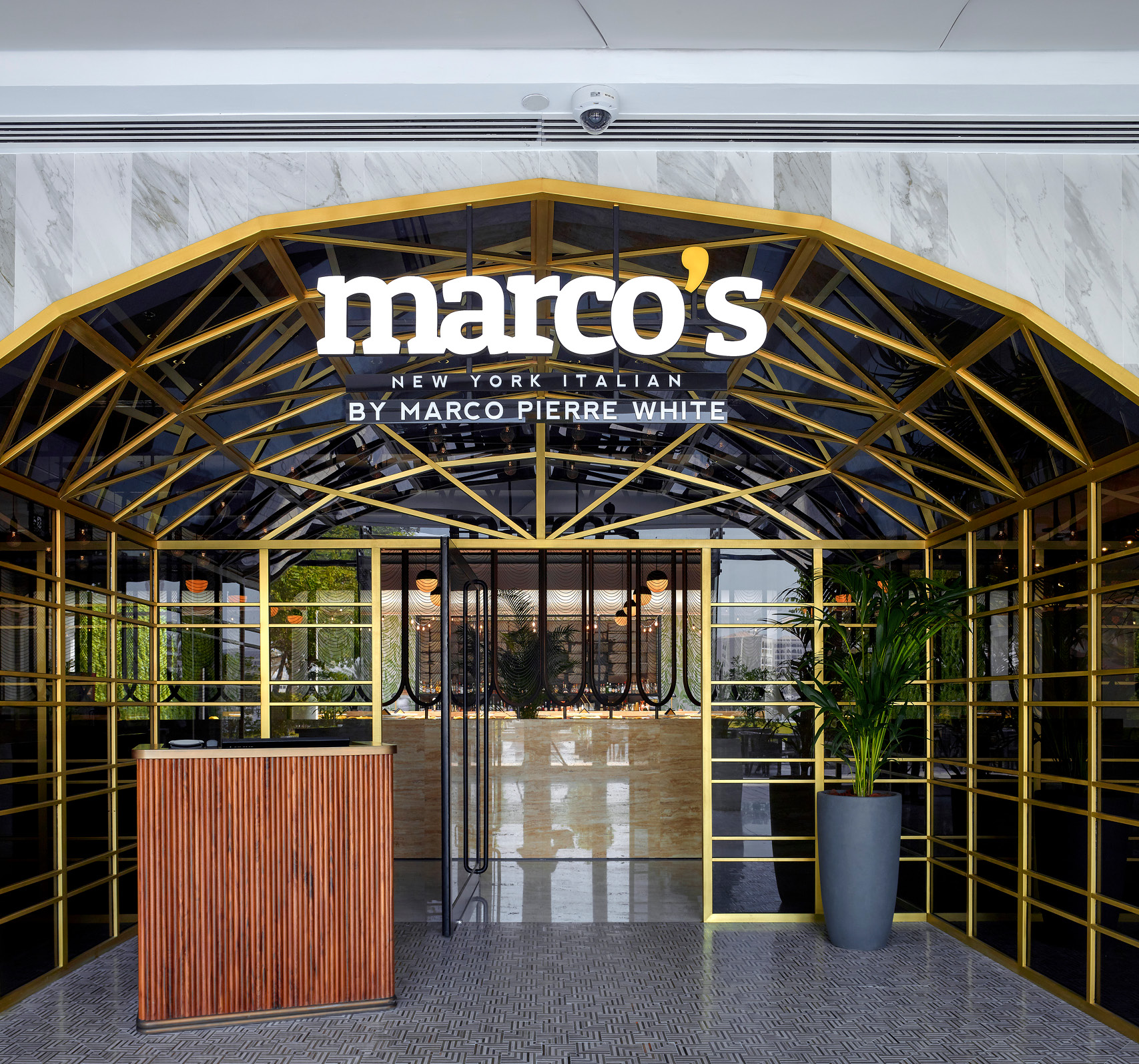
When we designed Marco Pierre White’s Italian at the Fairmont Bab Al Bahr in Abu Dhabi, we knew the room had to hold its own against one of the most dramatic hotel settings in the capital. The Fairmont overlooks the Sheikh Zayed Grand Mosque. The competition for the eye is extraordinary.
Our instinct, and Emma drove this, was to lean into restraint. To create a space that felt classic, considered, and warm rather than trying to out-drama the surroundings. The room needed to feel like Marco: confident, without being loud. There’s a certain theatricality to the man, but it’s never cheap. It’s always earned.
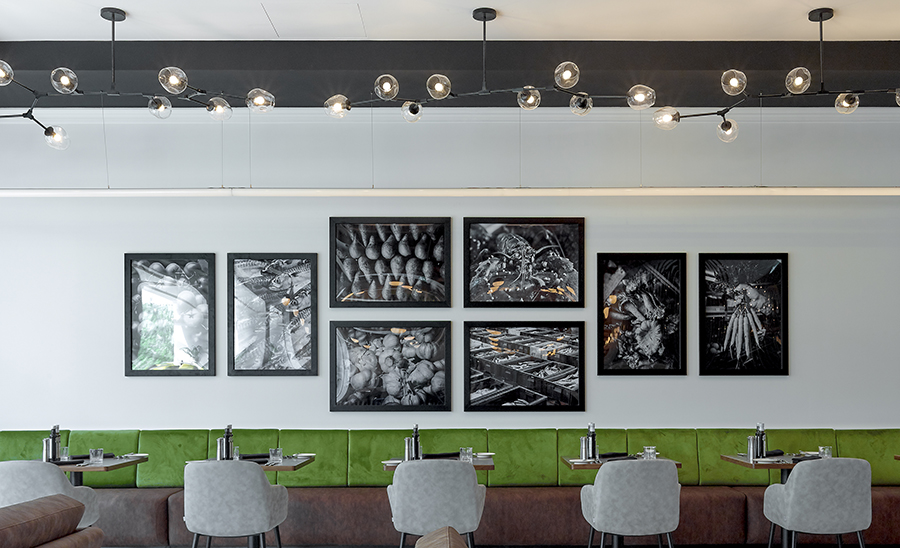
The result was a space that felt genuinely Italian in its warmth and generosity. Generous seating, layered lighting, materiality that invited touch rather than merely being looked at. Marco’s response when he saw it? He said it felt like a room he’d want to eat in himself. That’s the brief, always. Not: “Does it look good in a photograph?” But: “Would I want to spend three hours here?”
CID Magazine covered the project. The headline was “Marco Pierre White praises FINCH’s tasty Abu Dhabi restaurant design.” The word “tasty,” deliberately chosen I think, was Marco’s own language applied to a room. That still makes me smile. It’s the first time in a long time I’ve been called tasty, but once again, I’ll take it by association.
(Note: at the time of the CID feature, we were trading as Studio EM. Same team, same philosophy, but a few years ago we evolved into FINCH.)
The Room Does Not Win the Star. But It Frames the Experience
Most people think a Michelin-level restaurant experience begins and ends with the food. Officially, Michelin stars are awarded for outstanding cooking, and rightly so. But anyone who has spent time around serious restaurants knows the plate is only one part of the guest experience. The room does not win the star. But it can frame the food, support the service, build anticipation and make the guest feel that every part of the experience has been considered. Or it can quietly undermine all of it.
This matters enormously for interior designers working at the top end of hospitality. When a client like Marco Pierre White chooses FINCH to design his international locations, it’s because he understands that the room has to do serious work. It has to set the right expectation before a single menu is opened. It has to signal quality without announcing it. It has to make guests feel that everything about this experience has been thought about.
The things serious restaurateurs notice, and that great restaurant designers obsess over, tend to be invisible when they’re working correctly:
Acoustics. A restaurant that’s too loud signals chaos. One that’s too quiet feels clinical. The right acoustic environment is one where you can hear your dining companion clearly and feel the pleasant murmur of a room that’s alive. This is about material selection as much as it’s about design: soft furnishings, acoustic panels hidden within architectural elements, booth structures that create sound pockets. Especially if there’s an open kitchen, central bar, or a theatrical component. Each of these came up with Marco’s Italian in Abu Dhabi.
Light. This is everything. Flattering light makes food look better, makes guests look better, and sets the emotional temperature of the room. Harsh overhead lighting is the enemy of the fine dining experience. Layered lighting, ambient, task, and accent, allows a room to shift from the energy of a full lunch service to the intimacy of a dinner for two without any intervention. Emma has an instinct for lighting that I’ve never seen matched. We have a very simple ode to lighting design in the studio: a great lighting design can make a good design look great, and a bad lighting design can make a great design look awful. The latter is something we experienced too many times in our early days. And the level of cringe and design death I feel when I need my iPhone torch to read a menu is very real.
Flow. The movement of guests and staff through a space is choreography. A poorly designed room forces awkward encounters between servers and diners. It creates bottlenecks. It makes service feel effortful rather than effortless. The best restaurant rooms are the ones where the service team can do their job without the guest ever being aware of the infrastructure behind it. We design spaces where guests can feel like they’re having an intimate dinner, not sharing a meal with everyone else in the room.
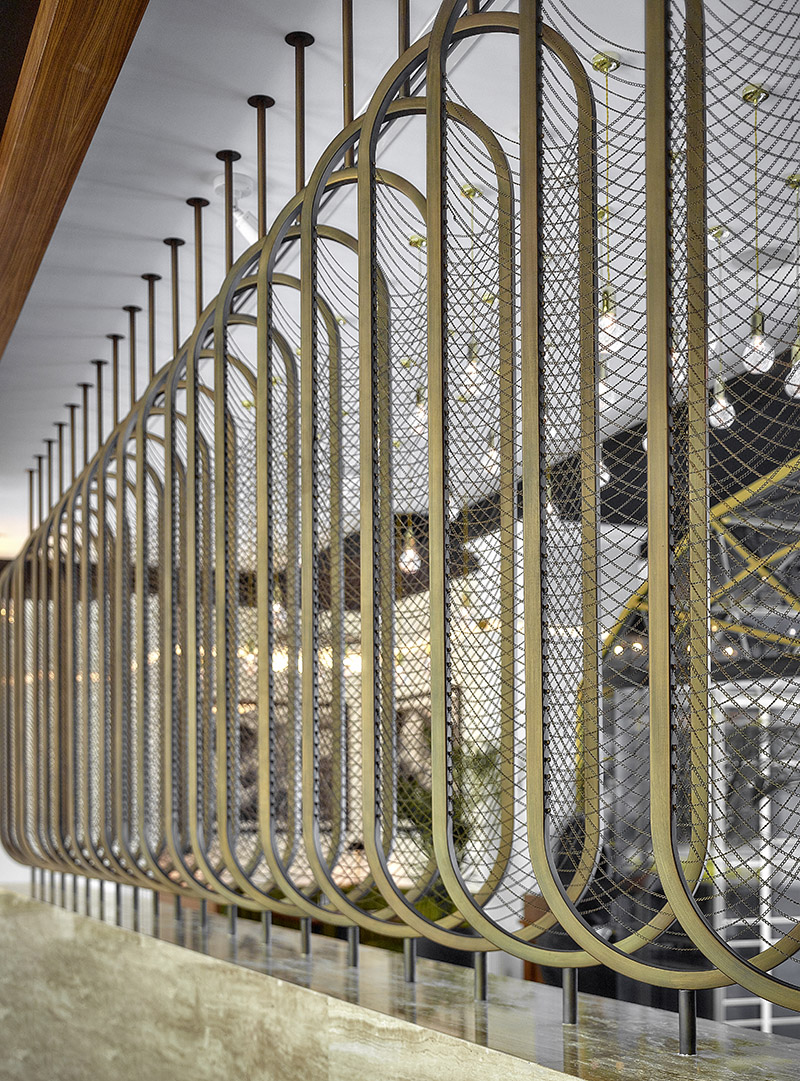
Detail. This is where Michelin lives. The stitching on a banquette. The weight of a door handle. The reveal between a wall panel and a ceiling. The toilet signs (don’t start me on this, that’s another post for another day). These are the things that guests can’t consciously identify but that their bodies register. A room full of those details feels right without anyone being able to say why. A room that skimps on them feels slightly off, always. Next time you’re in a nice restaurant, pay attention to the things that are often forgotten. Brass trims on a marble table top. The artwork placement and the lighting design around that artwork. Even the floor transitions between different zones. Once you begin to notice these little details, you’ll get a glimpse inside the mind of every designer who goes out for dinner. The struggle is real.
Rasoi by Vineet: Designing for a Pioneer
If Marco Pierre White represents the pinnacle of European culinary tradition, Vineet Bhatia represents something equally remarkable: one of the chefs who helped prove that Indian cuisine could earn the highest recognition in the world’s most demanding food culture.
Vineet was the first Indian chef to receive a Michelin star, awarded for his London restaurant Zaika and subsequently maintained at his Chelsea restaurant Rasoi. When his team approached us to design Rasoi by Vineet in Jeddah and Abu Dhabi, we understood we were being asked to translate something genuinely historic into physical space.
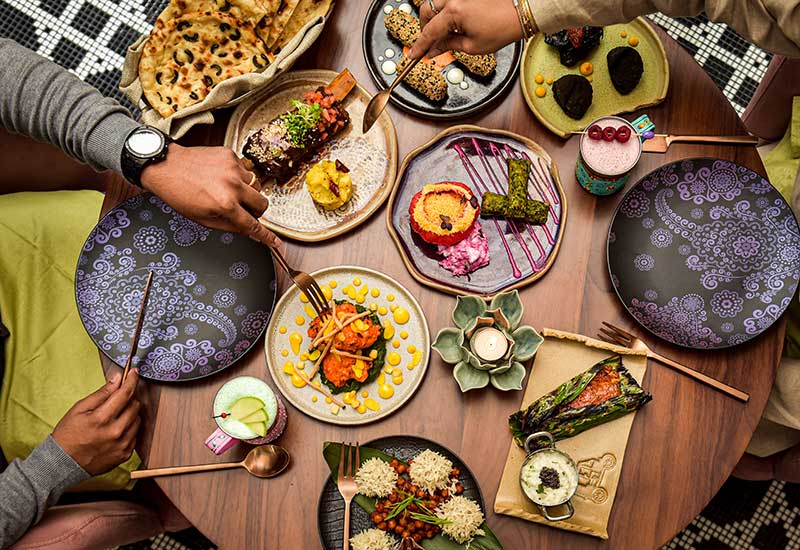
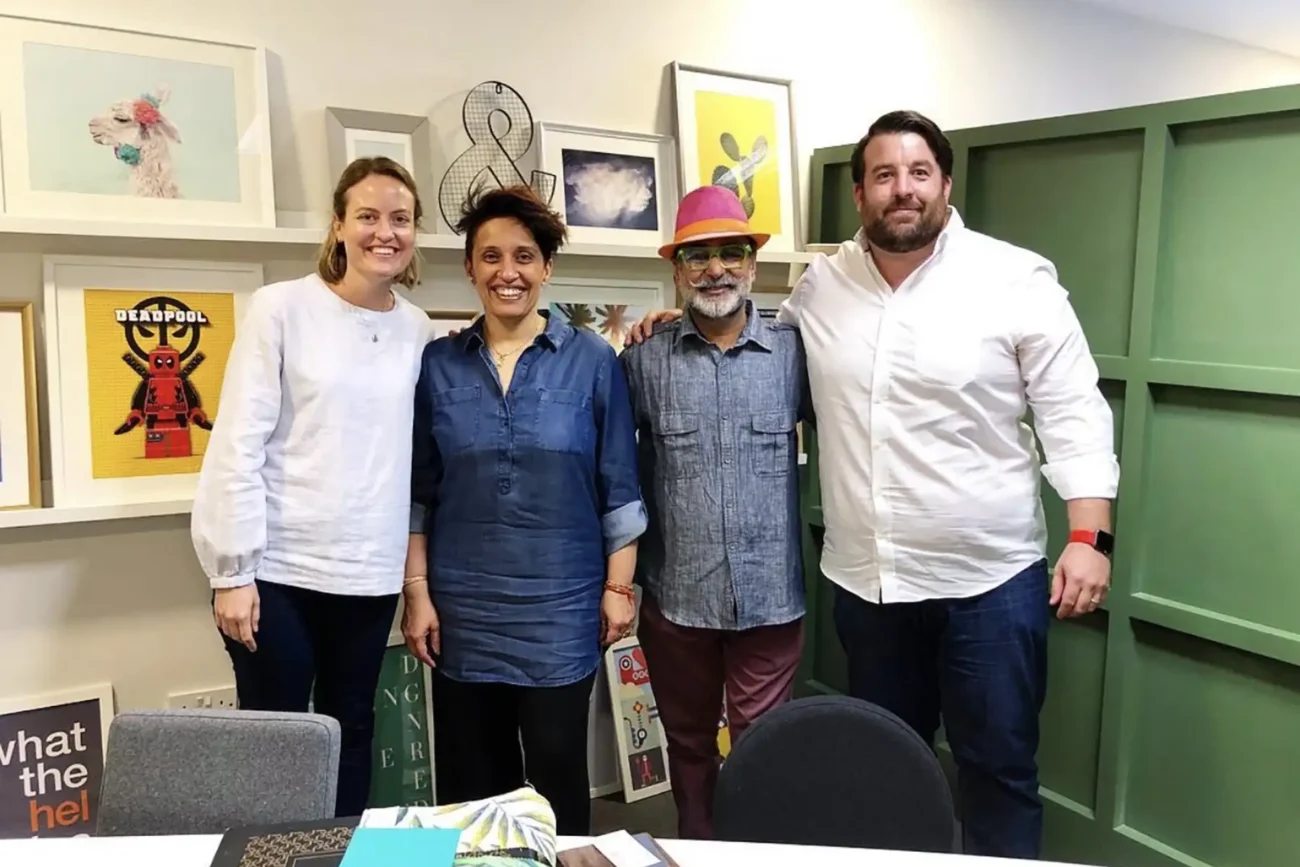
Sitting across a table with Vineet, and his wife Rashima, who is very much his creative partner in the same way Emma is mine, you’re immediately struck by how they both talk about food and design. For Vineet, there are emotional registers to his dishes, specific feelings he’s trying to create, a journey he wants his guests to go on. The food is never just delicious. It’s always about something.
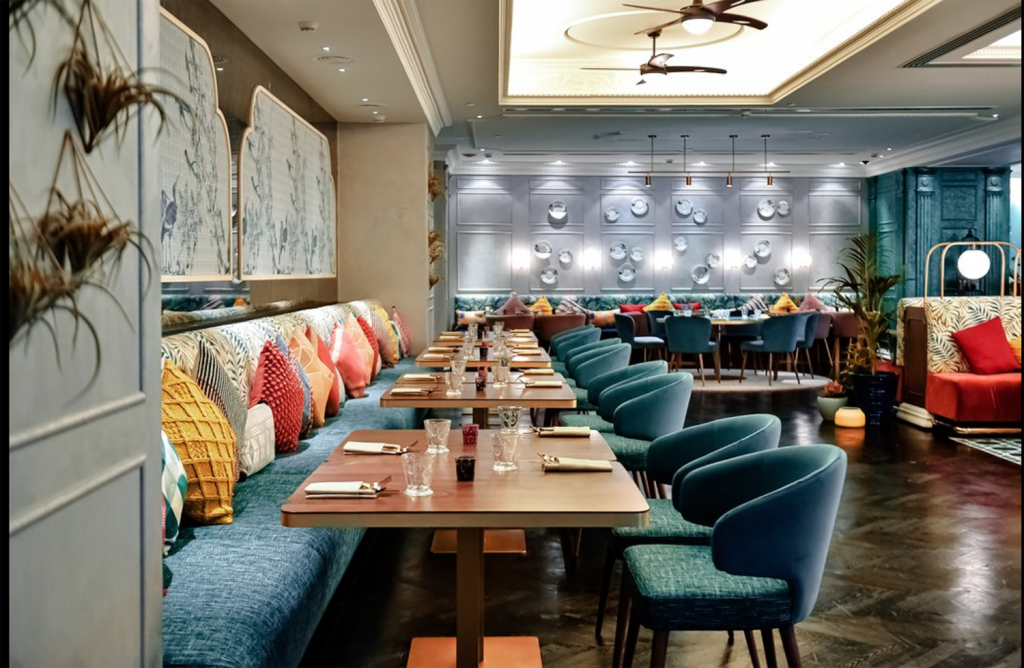
That conversation changed how we approached Rasoi. Emma’s instinct was to design a space that had the same layered quality as Vineet’s cooking: something that revealed itself gradually, that had depth rather than impact. Indian design language is extraordinarily rich, and the temptation when designing an Indian fine dining restaurant is to reach straight for the obvious references: the motifs, the colours, the patterns. Vineet’s food isn’t about those obvious references. It’s about something more sophisticated, the essence of Indian culinary culture expressed through an entirely contemporary lens.
So we did the same with the space. Traditional Indian elements are present, but they’re refined and contextualised. Sometimes even abstract, sometimes very concrete, but every decision is measured for balance. The warmth is there without the visual noise. The result, in the Abu Dhabi location at Jumeirah at Etihad Towers, is a space the National described as “bright and airy,” decorated with “pops of colour, modern chandeliers and traditional Indian touches,” with “cosy booths” that give “a sense of intimacy that is sometimes lacking in Indian restaurants.”
That intimacy is no accident. It’s designed.
The FINCH Philosophy: Doing More with Less
Emma once described our approach to a journalist as having no fixed style: “it is what it is, it’s what it needs to be for my client or the brief.” That sounds humble, but it’s actually the hardest and most sophisticated position a designer can take.
It’s easy to have a signature style. You apply the same palette, the same materiality, the same spatial gestures to every project and it becomes recognisable. Recognisable can be commercially valuable. But it’s not what a Michelin-calibre client is asking for. Marco Pierre White’s Abu Dhabi restaurants, his Tbilisi outlet, and Vineet Bhatia’s Jeddah restaurant should not look like siblings. They should look like themselves.
What unites our work across those projects, and across FINCH’s broader hospitality portfolio, isn’t a visual signature. It’s a commitment to the process.
Start with the chef’s philosophy, not a mood board. We spend time understanding how a client thinks about their food before we think about a room.
Design for service first. The most beautiful room in the world fails if it makes operations a nightmare. That debt always gets passed on to the customer.
Be precise about light. Every lighting decision is a decision about how people will feel. Take it seriously. The cringe and design death I feel when I need my iPhone torch for a menu is very real.
Resist the unnecessary. Every element we add must earn its place. If in doubt, take it out. Don’t be afraid to go with the bare minimum if it makes sense. You don’t need to look any further than Noma in Copenhagen to reinforce this design philosophy.
Detail obsessively. The difference between a good restaurant and a great one lives in the details that nobody consciously notices. Critique the details in the FF&E and joinery the way a chef would critique a red wine jus.
This is the recipe. It’s not complicated. It’s just very, very hard to execute consistently.
Why the Best Restaurant Interiors Are Never About Design
Here’s the thing I’ve come to understand after working with some of the most demanding culinary minds in the world: the best restaurant interiors are never really about interior design. They’re about hospitality. They’re about making someone feel, from the moment they walk through the door, that they are genuinely welcome, genuinely cared for, and in a place that has been built entirely for their pleasure. Think hard about all of the senses. There’s a cliched phrase “design for the senses,” it’s been taken to the extreme over the years and almost become too visceral, but the mantra still holds firm, even if it’s been bastardised.
Marco Pierre White understands this in his bones. It’s why his restaurants feel the way they do. It’s why, when you sit in one of the rooms we designed for him, you feel comfortable and stimulated and looked after all at once, without quite being able to put your finger on why.
Every project we take on starts with the same question Marco asked us on day one: how do you want people to feel?
That feeling doesn’t happen by accident. It’s designed. Every detail of it.
Add Your Heading Text Here
Working with FINCH on Restaurant and Hospitality Interior Design
FINCH is a Dubai-based interior design studio specialising in hospitality, restaurant interior design, F&B interiors and travel retail environments across the UAE, Saudi Arabia and international markets.
If you’re developing a restaurant, hospitality or F&B concept and want to talk about how the physical environment can support the guest experience, improve operations and amplify everything you’re building, we’d love to hear from you.
-
What makes a great restaurant interior design?
A great restaurant interior balances atmosphere, operational flow, lighting, acoustics, materiality and guest comfort. The best restaurant interiors support the food and service without overwhelming them.
-
Does restaurant interior design affect the dining experience?
Yes. While the food remains central, the interior frames the guest experience through lighting, acoustics, seating comfort, circulation, intimacy and the overall feeling of hospitality.
-
Who designs restaurant interiors in Dubai?
FINCH is a Dubai-based interior design studio specialising in restaurant interior design, hospitality design, F&B interiors and travel retail environments across the UAE, Saudi Arabia and international markets.